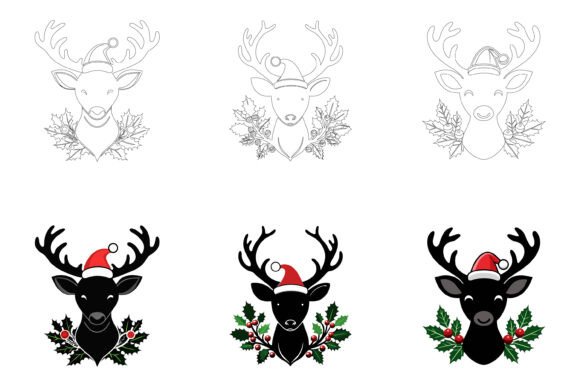
Head of a Deer Graphic Resource Deep Dive
When you look at a head of a deer illustration, you’re not just seeing a simple silhouette of an animal. You’re tapping into a symbol that carries weight in design, storytelling, and branding. A well-crafted deer head graphic can convey a sense of nobility, gentle strength, and connection to the outdoors. In this article, we explore a digital asset that brings that exact feeling into your projects: a carefully constructed vector illustration part of a special AI EPS collection. You’ll learn what makes it practical, where it fits, and how to adapt it without being a design expert.
What Makes a Deer Head Vector Special
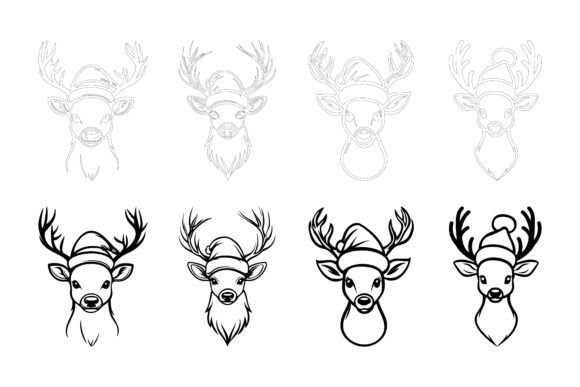
At its core, the head of a deer in this set is not a simple sketch—it’s a professionally layered vector built in Adobe Illustrator. That means every antler branch, ear curve, and facial detail exists on its own editable path. You don’t get a single flattened image. You get a structured file where you can isolate the snout, adjust the eye shape, or even recolor the fur markings independently. This level of organization turns a decorative graphic into a flexible building block for countless design tasks.
The illustration comes with an innate balance of realism and stylization. It avoids being too cartoonish or overly photorealistic, hitting a sweet spot that works for modern branding, educational diagrams, and decorative prints. The details are consistent: if you look at the texture lines around the nose or the symmetry of the antlers, you’ll notice perfection that holds up even when scaled to poster size.
Why a Non-Designer Should Care About File Formats
Perhaps you’re a blogger wanting to spruce up a nature article, a small business owner designing a logo for a hiking gear shop, or a teacher creating a wildlife presentation. You might not live inside design software every day, and that’s exactly why the included file formats matter. The download pack comes with AI (native Illustrator), EPS (a universal vector format), and a high-resolution JPG. The AI and EPS files give you full editing power. The JPG serves as a ready-to-use placeholder or a quick insert into a website when you don’t need to change anything. All three work seamlessly whether you’re on a Mac or a Windows machine, so there’s no need to worry about cross-platform headaches.
If you’ve ever opened a downloaded graphic and found a jumbled mess of ungrouped shapes, you’ll appreciate the neatly organized layer structure here. Each logical piece of the deer head is named and grouped sensibly. A beginner can open the file in a free vector editor like Inkscape, click on an antler, and immediately change its color without hunting through hundreds of unnamed layers. This thoughtful arrangement lowers the barrier for casual users while still giving professionals the precision they require.
Adapting the Head of a Deer to Match Your Brand
One of the first questions people ask is whether they can customize the graphic enough to make it unique. The answer is a clear yes. Because the illustration is built with clean, closed paths, you can throw on a bold orange fill to match an autumn-themed campaign, or reduce it to a single elegant line art style by removing the fill and thickening the stroke. You could even take just the antlers and use them as a standalone icon for a mobile app menu. The consistency of the design means no jagged edges appear when you modify paths, so even minor tweaks look intentional.
Editing colors is surprisingly straightforward. In Illustrator or similar software, you can globally swap the browns and beiges of the fur to monochrome grays for an edgy tech-startup look, or soften them to pastels for a baby shower invitation. The neat structure also allows you to scale the graphic without loss of quality—vector math ensures the head of a deer stays crisp on a tiny enamel pin mockup and on a massive trade show banner.
Practical Use Cases You Might Not Have Considered
Many people immediately think of a deer head for a rustic logo or a t-shirt design, and it certainly excels there. But its value stretches further. For educators, the graphic can become a visual aid in a biology lesson about mammals or an exercise in identifying wildlife. Since you can edit the label placement and even add arrows pointing to specific anatomical features directly in the layered file, it becomes an interactive teaching tool.
For content creators and marketers, the head of a deer works wonderfully in infographics about forest conservation, hunting safety statistics, or seasonal blog posts. Its neutral yet distinctive appearance allows it to accompany text without distracting. You might embed it into a pie chart where the deer shape visually replaces a standard icon, making the data feel more organic. Because the set includes a high-res JPG, you can immediately drop it into a WordPress post or a social media graphic without opening vector software.
App and web designers will find the deer head useful as a symbol for nature-related features: a profile avatar placeholder for an outdoor community app, an achievement badge for a fitness tracker that awards “deer-like agility,” or a loading screen illustration for a wildlife camera app. The scalability means the same file can serve a favicon and a hero image without pixelation. And if the brand shifts from a realistic tone to something more abstract, you can take the original vector and simplify it further—all because the editable source is in your hands.
In the print world, the applications are just as broad. Stationery designers can use it to create elegant wedding invitations with a woodland theme, while small business owners can produce custom merchandise like mugs, notebooks, and stickers. The crisp lines reproduce brilliantly on paper and fabric alike. You can even separate elements for screen printing, as the organized layers let you isolate color plates without guesswork.
Turning One Graphic Into a Whole Visual System
A single head of a deer illustration might seem like a one-off asset, but the editing freedom it gives you unlocks a family of related visuals. For example, you could duplicate the original and apply a different color treatment to create a set of icons representing seasons: a spring deer with budding antlers (by editing the antler tips), a winter deer with a frosted look (by lightening the fill and adding a subtle blue tint). You can remove the facial features entirely to produce an elegant, minimalist silhouette for high-end packaging.
The consistency in detail ensures that even your variations feel cohesive. A silhouette taken from the same master file will share the same proportional harmony as the fully detailed version. This is something you rarely get with randomly collected graphics from different creators. When your website’s hero image, your blog’s thumbnail, and your Instagram highlight cover all trace back to the same core vector, your visual branding tightens up without extra effort.
What to Keep in Mind Before Diving In
While this head of a deer illustration makes things easy, a few practical points will help you avoid common stumbles. First, understand that to fully edit the AI and EPS files, you do need vector-compatible software. Adobe Illustrator is the natural choice, but free alternatives like Inkscape or Affinity Designer also work. The file structure is robust enough that you won’t lose layers when moving between applications, but it’s smart to save a backup copy of the original download before you experiment.
Second, check the usage rights included with your purchase. Typical AI EPS collections grant you broad commercial use, allowing you to incorporate the design into logos, merchandise, and digital products you sell. However, you usually cannot resell the file as-is or claim copyright over the unaltered illustration. Reading the license once saves you from uncertainty later. Since the set is built for both Mac and Windows, you don’t need to worry about operating system lock-in, but do confirm that your software version supports the AI and EPS formats.
Third, think about your end goal for color. The illustration arrives with a sophisticated natural palette, but you might need to switch to CMYK if printing professionally or to RGB for web use. Because the original colors exist as global swatches in the AI file, adjusting an entire palette takes only a few clicks. Beginners sometimes overlook this and manually recolor each piece, which is far slower. Use the inherent organization to your advantage.
Finally, don’t let the perfection of the details intimidate you. A meticulously constructed head of a deer vector is a gift, not a constraint. You don’t have to use every layer. You can simplify, abstract, or even trace portions to create something entirely new. The value lies in the solid foundation it provides. So whether you’re a hobbyist creating a family crest or a marketing team refreshing a conservation brand’s look, this illustration gives you the raw material to start with confidence.
The artwork does the heavy lifting of proportion and form, leaving you free to focus on the creative direction. And when you see the finished product—a polished logo, an engaging infographic, a heartfelt greeting card—you’ll realize how a well-organized vector file turned an idea into something tangible and professional. That’s the real power behind a thoughtfully prepared head of a deer design in today’s AI EPS collections.