Photography Design: Bridging Visual Art and Graphic Communication
Photography Design represents a powerful convergence of disciplines. It's not merely about taking a photograph; it’s about integrating photographic elements into a structured, purposeful design framework. This approach blends the authenticity and emotional resonance of photography with the clarity and functionality of graphic design. For professionals, creators, and businesses, it’s a methodology that transforms raw imagery into cohesive visual systems, enabling more effective communication.
Why Photography Design Matters in Modern Visual Work
In a world saturated with visual content, standing out requires more than a beautiful image. It requires intentional design. Photography Design provides a structured approach, ensuring that photographic assets work harmoniously within layouts, brand identities, and user interfaces. It considers composition, color theory, typography integration, and spatial relationships, treating the photograph as a core component of the overall design rather than a standalone element. This discipline is essential for creating materials that are not only aesthetically pleasing but also strategically effective.
The Core Characteristics of Effective Photography Design
Successful Photography Design projects share several notable qualities. They maintain a strong sense of visual consistency, ensuring that photography aligns with the established color palette, mood, and stylistic tone of the project. There is a focus on functional integration, where images serve a clear purpose—guiding the viewer’s eye, supporting a narrative, or illustrating a concept. Furthermore, attention to technical precision is paramount, from resolution and cropping to careful editing that preserves the image's integrity while adapting it for its designed role.
Practical Applications Across Industries and Projects
The utility of Photography Design is vast and varied. For a marketing agency, it might involve crafting a campaign where product photography is seamlessly merged with infographic data points on a website. An educator could use it to design compelling lecture slides where historical photographs are annotated and layered with key quotations for enhanced learning. Entrepreneurs rely on it to build brand kits where logo, typography, and approved photographic styles are defined as a unified system for all their materials.
In digital environments, consider a mobile app interface. Photography Design principles dictate how user profile pictures are framed within the UI, how banner images scale across different screen sizes, and how photographic backgrounds interact with text readability. For print, a magazine layout exemplifies this discipline, where every photo placement, caption alignment, and bleed margin is calculated to create a harmonious reading experience.
Unlocking Efficiency with Specialized Asset Collections
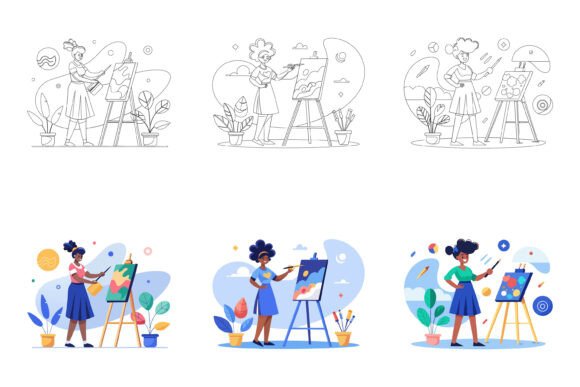
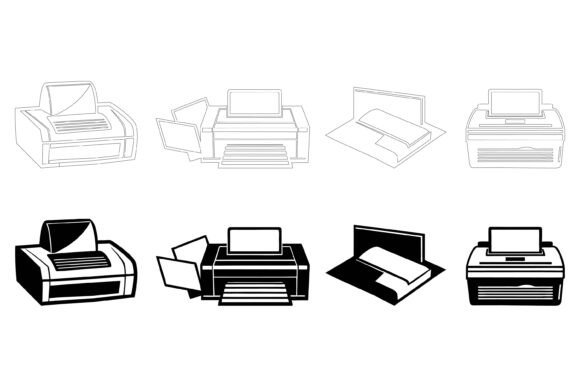
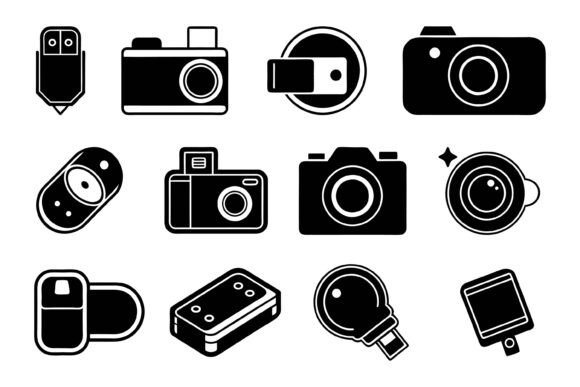
Executing high-quality Photography Design often requires a library of dependable, editable assets. This is where specialized collections, such as our Hello Welcome to our Special AI EPS Collections, become invaluable tools. These collections are crafted not as random bundles of graphics, but as systematic sets designed to integrate directly into Photography Design workflows.
What makes these AI EPS illustration sets special is their foundational role in the design process. They act as the scaffolding upon which your photographic elements can build. The file includes both AI EPS and JPG formats, providing the raw, editable vector data for customization and a ready-to-use raster version for quick placement. Designed for both Mac and Windows users, they ensure accessibility.
The Operational Benefits of a Well-Structured Resource
The true value lies in the implementation details. A neatly organized file and layer structure saves hours of frustrating exploration, allowing you to find and isolate specific elements instantly. The perfection in details and consistency across the set means you can combine multiple illustrations without worrying about mismatched line weights or stylistic clashes. This consistency is crucial for maintaining the professional polish expected in Photography Design.
Their suitability for print, web, symbols, and apps means one resource can serve across an entire multi-channel project. Perhaps most importantly, the ease of customization—you can edit it, change colors, and modify the icon so easily according to your needs—makes them a dynamic part of your design process. Instead of being constrained by a fixed graphic, you can adapt these vectors to match the exact color scheme derived from your photography or to alter a symbol to better complement a photographic subject.
Integrating Illustrative Assets with Photographic Elements
Imagine you are designing a website for a boutique travel agency. You have a stunning library of landscape photographs. By using this EPS collection, you can quickly create custom map icons, decorative borders for photo galleries, and unique badge illustrations that echo the organic shapes found in your photos. Because the vectors are editable, you can sample a color directly from your sunset photo and apply it to an illustrative sun icon, creating a flawless, custom color harmony that pre-packaged icons rarely offer.
For a freelancer or small business owner, this efficiency translates directly to productivity. You reduce the time spent searching for or creating from scratch the graphic accents your design needs, freeing you to focus on the higher-level creative and strategic decisions that define exceptional Photography Design.
Making the Choice: Selecting Resources for Your Design Practice
When evaluating any asset collection for use in Photography Design, consider its adaptability first. Can it be molded to fit your specific visual language? Examine the technical structure; a clean, layered file is a sign of professional creation and will pay dividends in usability. Assess its scope of application—will it be useful across the types of projects you commonly undertake? Finally, ensure it aligns with your output requirements, whether for high-resolution print or optimized web use.
Our AI EPS collections are engineered with these considerations in mind. They are tools meant to empower, not limit. They provide a foundation of quality and consistency while handing you full creative control to edit and integrate them into your unique Photography Design vision.
In essence, Photography Design is about purposeful visual synthesis. Combining authentic photography with intelligently designed graphic elements creates communication that is both resonant and clear. Having a versatile, high-quality, and easily editable illustration set at your disposal removes a significant technical barrier, allowing you to concentrate on what matters most: crafting compelling visual stories that engage, inform, and inspire your audience. So what are you waiting for? Integrate these resources into your toolkit and elevate the efficiency and impact of your design work today.