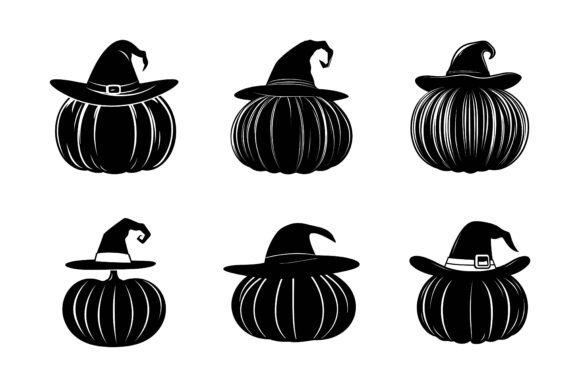
Exploring the Depth of Hatching Pumpkins Head Detail in Professional Vector Illustration
The Technique Behind Expressive Pumpkin Faces
When you examine a pumpkin head illustration that truly stands out, the secret often lies in its linework. The hatching pumpkins head detail refers to the careful placement of parallel or crossed lines that create shadow, volume, and texture on the carved surface. This technique, borrowed from traditional pen-and-ink drawing, transforms a flat pumpkin shape into a realistic or stylized object with depth. Digital artists replicate hatching with precision using vector tools, ensuring every line contributes to the overall mood—whether it’s a friendly jack-o'-lantern grin or a menacing Halloween icon. The spacing, angle, and weight of each stroke are not random; they respond to a virtual light source, making the pumpkin’s contours feel rounded and its carved cutouts pop.
In the context of illustration assets, mastering hatching often means countless hours of manual refinement. The result is a set of graphics where the head detail becomes the focal point. For example, around the eyes and mouth, tighter hatching can simulate deep crevices, while looser strokes on the cheeks suggest a gentle glow. This meticulous approach ensures that even at small sizes—like in app icons or infographic markers—the pumpkin retains its character and readability.
Why Vector Format Elevates Hatching Work
Raster images lose quality when scaled, but hatching patterns in formats like AI and EPS remain crisp at any resolution. This is because each line is defined by a mathematical path rather than pixels. When you download a premium illustration set that contains AI EPS and JPG files, you are essentially receiving a production-grade toolkit. The AI file (Adobe Illustrator) preserves all editable paths, allowing you to tweak the thickness of each hatch line or adjust the overall stroke style. The EPS version ensures compatibility across operating systems, making the same artwork accessible to both Mac and Windows users. The JPG serves as a ready-to-use preview or a quick web insert without the need for vector software.
One overlooked advantage is how these vector files handle the hatching pumpkins head detail when you need to override colors. Because the lines are separate objects, you can apply a brand’s palette to the entire pumpkin within seconds, while the hatching structure remains intact. This adaptability is vital for designers who must integrate the illustration into diverse media—from a dark-themed event poster to a bright children's book cover.
Unpacking the Core Elements of a Specialized Illustration Set
Not all pumpkin illustrations are built alike. A thoughtfully organized collection goes beyond aesthetic appeal; it provides a neatly organized file and layer structure. Imagine opening an AI file and finding clearly labeled layers such as “stem,” “base silhouette,” “eyes hatching,” “mouth details,” and “highlights.” This logical grouping lets you isolate or hide specific elements instantly. For instance, if you only need the hatching lines for a tutorial on shading techniques, you can export just that layer. Such organization slashes editing time and reduces the frustration of hunting through unnamed groups.
Perfection in Details and Consistency Across Graphics
The phrase perfection in details and consistency captures a fundamental quality requirement. When an illustration set promises this, it means every pumpkin head icon within the collection follows the same visual language: identical hatching density, consistent light direction, uniform line ends, and harmonized color profiles. This matters enormously when you use multiple icons together in an infographic, mobile app, or website. A user who sees a series of pumpkin icons expects them to feel part of the same family. Inconsistent hatching—where one pumpkin uses thick crosshatching and another uses thin, spaced lines—can make the design appear amateurish.
Behind the scenes, achieving this demands rigorous quality control. The creator typically establishes a grid system and a style guide before drawing. All pumpkins might use a 45-degree hatching angle at 0.75 pt stroke weight, with highlights placed at 10 o’clock. Such constraints, when applied to the hatching pumpkins head detail, guarantee that even a pumpkin with a goofy expression looks technically cohesive next to a spooky one.
Practical Applications for a Diverse Audience
- Graphic designers & marketing professionals: Use the editable AI files to craft event flyers, social media banners, and merchandise. The hatching detail ensures images don’t lose impact when printed on T-shirts or mugs. Layers let designers swap the pumpkin’s carved face to fit a brand’s quirky tone.
- Web and app developers: Need crisp icons for navigation or seasonal UI elements. EPS files can be converted to SVG, maintaining the hatching's sharpness on high-DPI screens. JPG previews help in quick prototyping.
- Educators and researchers: Pumpkin graphics can illustrate lessons on plant lifecycles, cultural traditions, or even shading techniques in art classes. The ability to modify the icon easily—for example, removing the hatching to show only the silhouette—makes teaching materials more dynamic.
- Small business owners: Someone running a café or farm stand can personalize signage with pumpkin icons that reflect their brand colors. Because the files work on Mac and Windows, no extra software licensing headaches occur.
- Hobbyists and crafters: Use the JPGs as templates for carving real pumpkins or creating embroidery patterns, where the hatching lines guide stitch directions.
Leveraging File Format Strengths for Specific Media
AI (Adobe Illustrator): This is your master file. Here, every hatch is an editable stroke. You can re-scale the pumpkin to billboard size without any degradation. The native format supports complex layer structures and blend modes, perfect for creating special effects like glowing eyes by adding a soft transparency behind the hatching around the eye sockets.
EPS (Encapsulated PostScript): A universal vector format that integrates smoothly with older layout software, CorelDRAW, or even Microsoft Office if you’re inserting graphics into a document. It retains the hatching pumpkins head detail perfectly and is often the preferred format for professional printers who require a stable, high-quality vector source.
JPG: Lightweight and universally supported. Use it for email newsletter images, blog posts, or as a placeholder in website mockups. While not editable with respect to individual elements, the high-resolution JPG preserves enough of the hatching texture for most digital viewing distances.
Editing and Customization without Compromising the Art
One of the standout promises of a premium illustration set is that you can edit it, change colors and modify the icon so easily according to your needs. With vector-based hatching, this freedom extends far beyond a simple tint. Suppose you receive a pumpkin illustration with classic orange skin and black hatching. You can:
- Replace the orange base with a muted green to represent a gourd.
- Change the hatching lines from black to dark brown for a vintage, engraved look.
- Adjust the stroke weight to make shading heavier or lighter, emphasizing different features.
- Duplicate the hatching layer and offset it slightly to create a false embossed effect for stationery.
Organization and Layer Logic: The Backbone of Efficiency
Behind every seamless editing experience lies an organized file and layer structure. When you open a well-prepared file, you don’t see a single flattened image; you encounter a logical hierarchy. Typically, you’ll find:
- Background (often optional or transparent).
- Main silhouette – the unadorned pumpkin body.
- Carving cutouts – the eye, nose, and mouth shapes that show the inner cavity.
- Hatching layer(s) – all shading lines, meticulously grouped by anatomical zone.
- Highlights & effects – subtle reflections or glow overlays.
Consistency as a Trust Signal for Professional Work
When you invest time into sourcing assets, you want assurance that the entire collection adheres to the same quality standard. Inconsistencies are more than cosmetic annoyances; they can undermine a project’s credibility. Imagine an infographic that uses several pumpkin icons to denote steps in a process. If one pumpkin has delicate, refined hatching while another looks crudely sketched, the audience may distrust the data presented, even if purely on a subconscious level. A set that highlights perfection in details and consistency solves this by delivering what feels like a custom-commissioned series. Each pumpkin head is drawn using the same brush engine, the same pre-set angles, and the same number of hatch lines per square inch. This reliability also means you can confidently reuse the assets across future projects without worrying about quality drift.
Cross-Platform Readiness for Modern Workflows
The assurance that files are designed for Mac and Windows users is more significant than it sounds. Creative work often happens on macOS, while corporate environments may use Windows. An EPS file, in particular, must embed fonts or convert text to outlines to appear correctly on systems that lack the original typeface. A professionally assembled pumpkin set will have already handled such conversions, so the hatching lines display identically whether opened in Adobe Illustrator on a MacBook or in Inkscape on a Linux machine via EPS. The JPG previews are platform-agnostic, of course, but even the native AI file can be saved in a backward-compatible format that older PC versions of Illustrator can read. This forward-thinking approach eliminates rework and ensures that the hatching pumpkins head detail reaches its audience exactly as the artist intended.
Integrating Hatching Pumpkins into Print, Web, and Interactive Media
The statement suitable for print, web, symbols, apps, infographics covers a wide spectrum, and the hatching technique needs to adapt to each. For print, high-resolution JPGs at 300 DPI ensure that the line texture remains tangible on paper—viewers might even perceive a subtle tactile quality if the piece is printed on textured stock. On the web, you might optimize the same pumpkin as an SVG derived from the AI file, where the hatching paths are lightweight code that loads quickly. App icons often need simplified versions; a good set provides the base detail, and you can reduce the hatching density or remove certain lines to achieve a cleaner, smaller-scale readability without starting from scratch. For infographics, the pumpkin might serve as a bullet point or a statistical marker, and the consistent hatching style helps tie together otherwise disparate data charts into a cohesive visual story.
Embracing the Artistic Value without a Promotional Push
Ultimately, the value of a specialized AI EPS illustration set lies in how it empowers creators to obtain a high level of artistry without spending hours on repetitive foundational work. The complex hatching pumpkins head detail becomes a building block—you are not merely buying an image; you are acquiring a carefully constructed system of paths, layers, and gestures that you can deconstruct for learning or repurpose for client work. While the marketplace may frame this as “buy now and start using,” the wiser approach sees the asset as a collaboration between the original artist and the end user. You bring your context, your editorial eye, and your unique project requirements; the illustration set answers with technical excellence and aesthetic readiness. Whether you are a researcher needing a culturally symbolic icon for a publication, a business owner updating seasonal branding, or a hobbyist experimenting with digital art, the investment rewards you with time saved and quality guaranteed—qualities that any audience appreciates.