Awesome Cool Monkey Logo: Integrating Vector Illustrations Into Practical Creative Workflows
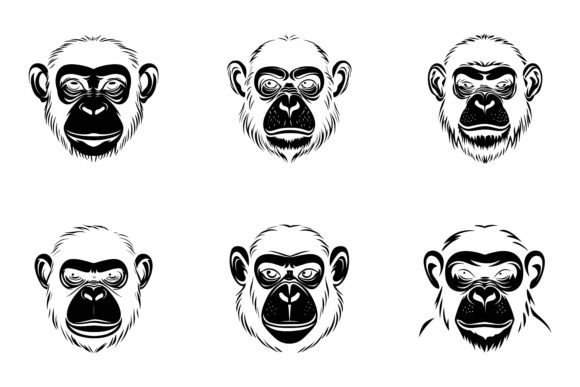
The Awesome Cool Monkey Logo set is more than a playful graphic—it is a deliberately constructed asset built for real production environments. The package includes AI and EPS vector files along with a high-resolution JPG, designed to work seamlessly on both Mac and Windows systems. Because the files are delivered with a neat layer structure and meticulous attention to detail, they fit directly into professional pipelines where time, compatibility, and editability matter.
When you download the collection, you are not simply receiving a single image. You gain access to a versatile illustration resource that can serve as a brand mascot, an application icon, an infographic element, or a visual anchor for marketing campaigns. The core value lies in how quickly you can move from unpacking the folder to integrating a polished, customized version of the monkey logo into your own projects.
Where the Awesome Cool Monkey Logo Fits in Your Design Process
Every creative workflow benefits from well-prepared starting points. Before a project begins, you might be exploring visual directions, testing how a playful character could humanize a tech brand, or looking for an icon that balances personality with readability. The Awesome Cool Monkey Logo works as a concept accelerator. Instead of spending hours sketching a mascot from scratch, you can open the AI file, review the organized layers, and immediately assess whether the base illustration aligns with your creative brief. That rapid evaluation reduces the time between ideation and decision-making.
During a project, the illustration often becomes a recurring element. A product designer may place the monkey in onboarding screens, while a marketing lead uses the same graphic in email headers. Because the underlying file structure is consistent and editable, each team member can adapt the logo to their output without introducing visual drift. After a launch, the same asset continues to serve—it might be recolored for seasonal campaigns, resized for merchandise, or exported in alternative formats for a new web layout. Having a master vector file means the Awesome Cool Monkey Logo is never a one-time asset; it evolves with the brand.
File Compatibility and Organizational Clarity
The decision to include AI, EPS, and JPG formats is not arbitrary. AI (Adobe Illustrator) files preserve full editability for those working in the Adobe ecosystem, while EPS extends compatibility to CorelDRAW, Affinity Designer, and many other vector applications. The JPG serves as a lightweight reference or placeholder, useful for quick presentations, website mockups, or sharing previews without transferring large working files. Mac and Windows users encounter no conversion headaches—font outlines, colors, and path structures remain intact across operating systems.
More important than format support is the internal organization. Each file in the Awesome Cool Monkey Logo set arrives with clearly named layers and grouped elements. This structure lets you isolate the monkey’s face, body, accessories, or shadow effects without hunting through hundreds of unnamed paths. For a production artist preparing assets for print, being able to turn off a layer or select a single object within seconds is not a luxury; it is a practical necessity. That same organized approach helps developers who need to export SVG slices or marketers who want to replace a background color without touching the main illustration.
Editing and Customization Without Compromise
What makes the collection truly useful is how easily you can edit, change colors, and modify the icon to fit your needs. Vector illustrations are resolution-independent, so scaling the monkey logo from a favicon to a trade show banner requires no redrawing. The details remain crisp. To change the overall color scheme, you can select grouped elements and apply your brand’s hexadecimal values directly. Because the design includes consistent stroke weights and balanced negative space, even a non-specialist can make tasteful adjustments that preserve the original integrity.
Practical customization often involves three straightforward steps: ungroup the relevant components, recolor using a swatch palette, and export for the target medium. If your project demands a more radical modification—perhaps turning a full-body monkey into a head-only badge—the structured layers let you hide the torso and limbs, then export only the new composition. The Awesome Cool Monkey Logo thrives in this kind of flexible environment because it was built with modification in mind, not locked as a finished, flat artwork.
Cross-Media Use: Print, Web, Apps, and Infographics
One asset rarely serves all channels without adjustment, but a well-prepared vector illustration comes close. For print, the AI or EPS file can be converted to CMYK and placed into InDesign or Photoshop layouts. The high-detail rendering ensures that even fine lines in the monkey’s expression survive offset or digital printing without breaking up. For web and app interfaces, you can export clean SVGs that remain lightweight, accessible, and responsive across screen sizes. The included JPG gives you a ready-to-upload image for social media posts or blog headers when speed is more critical than scalability.
The mention of symbols, apps, and infographics in the product description highlights how a single graphic can serve distinct content goals. In an infographic, the monkey logo might act as a data visualization mascot, pointing to important statistics or segmenting sections. In a mobile app, it could appear as a loading screen character or a notification badge. Because the core illustration stays consistent, users encounter the same friendly visual language regardless of context. That consistency helps build recognition, and the organized file structure makes it easy to produce all these variants without mismatched proportions or unintended color shifts.
Quality Control and Attention to Detail
When a creative asset promises perfection in details and consistency, that claim must hold up under zoom. The Awesome Cool Monkey Logo invests care in anchor point placement, curve smoothness, and the relationship between overlapping shapes. In a logo context, even a slightly off-center eye or misaligned cheek patch can feel unprofessional. The set avoids these pitfalls by delivering artwork that has been checked for path continuity and uniform styling across all included versions.
This level of finish matters when the monkey logo sits next to other brand elements like typography, photography, or UI components. A poorly constructed vector can introduce jagged edges at small sizes or reveal gaps when a client asks for a one-color knockout version. With the provided files, you can confidently apply a stroke conversion, expand appearances, or create a silhouette without discovering hidden construction flaws. The organized layer structure also supports quality checks: you can quickly toggle each element on and off to verify that nothing distorts when exported to a different format.
Long-Term Value and Reuse Across Projects
An editable vector illustration behaves differently from a flat raster image. As your business grows, you might refresh your brand palette, introduce new sub-brands, or launch products aimed at different audiences. The Awesome Cool Monkey Logo can be recolored and restyled without purchasing a new asset. That long-term adaptability reduces the total cost of ownership, especially for entrepreneurs and small business owners who need their marketing spend to stretch. A freelance designer who acquires the set can also reuse the monkey character across multiple client projects, each time tailoring it to a unique visual identity while avoiding copyright ambiguity—as long as the license permits commercial use, which most stock illustration sets of this kind do.
Maintaining an archive of editable source files also protects against future software shifts. Since both AI and EPS are widely supported, you can open and edit the monkey logo years from now, even if your current design application evolves. The JPG serves as an immediate reference point, so you always have a preview that matches the original, even when browsing file directories without a graphics program open.
Integrating the Monkey Logo Into Existing Design Systems
Design systems thrive on reusable components. Introducing a new illustration into such an environment requires that it plays well with predefined spacing, color roles, and typographic constants. Start by auditing your current asset library. Identify where a character-driven element adds warmth or explains a concept—perhaps in empty states, error pages, or reward badges. The Awesome Cool Monkey Logo fits these slots without requiring you to rebuild its geometry every time.
Establish a working copy of the AI file as your master, then create separate artboards for each approved variant. Use global swatches tied to your design system’s color tokens so that swapping from primary to secondary palette updates every instance consistently. Export PNGs and SVGs in predetermined sizes that match your component specifications. By treating the monkey illustration as a system component rather than a one-off graphic, you shorten the path from concept approval to production deployment.
A Practical Workflow Example
Consider a startup that has just named its new team communication app “Monkey Chat.” The founder purchases the Awesome Cool Monkey Logo set, extracts the zip, and opens the AI file in Illustrator on a Windows machine. The file opens without errors, all layers appear in a logical order. The founder selects the monkey’s body and samples a bright orange from the app’s color palette. After filling the shape, she notices that the eyes and mouth remain dark for contrast—exactly what the design requires. She exports an SVG for the web app header, a high-resolution PNG for the App Store listing, and an EPS for future print materials. Within a single afternoon, the core brand mark is ready across platforms, all from one initial purchase.
Later, the marketing team needs a Halloween version. They duplicate the monkey layer, add a small hat graphic, change the orange to purple, and export a social media banner. Because the layer structure was maintained, the original monkey remains untouched and can be reverted to instantly. This type of iterative, non-destructive editing is only possible because the source files were thoughtfully prepared.
Avoiding Common Pitfalls
Even with a high-quality asset, some missteps can slow you down. Always duplicate the original layer before making destructive edits, and label your modified artboards clearly. When saving back to EPS, verify that you are not flattening layer information unless required by the printer. If you are switching between Mac and Windows, keep an eye on font substitutions—though the monkey illustration itself uses outlines, any text you add may be affected. Use the JPG as a quick guide to ensure your recolored version still conveys the intended mood under different lighting conditions or backgrounds.
If you are collaborating with developers who need the asset in a specific format, communicate early about whether SVG, PNG, or even a Base64-encoded data URI works best for their tech stack. The versatility of the Awesome Cool Monkey Logo means you can accommodate almost any technical constraint without losing visual quality.
The strength of this illustration set lies not in flashy promises, but in how it quietly fits into the rhythm of your work. Whether you are building a brand from scratch, refreshing an existing identity, or simply looking for a reliable visual element that can flex across media, the organized, editable, and consistent nature of these files makes execution straightforward. Once you load the Awesome Cool Monkey Logo into your design application, you start spending less time wrestling with artwork and more time moving your project forward.